
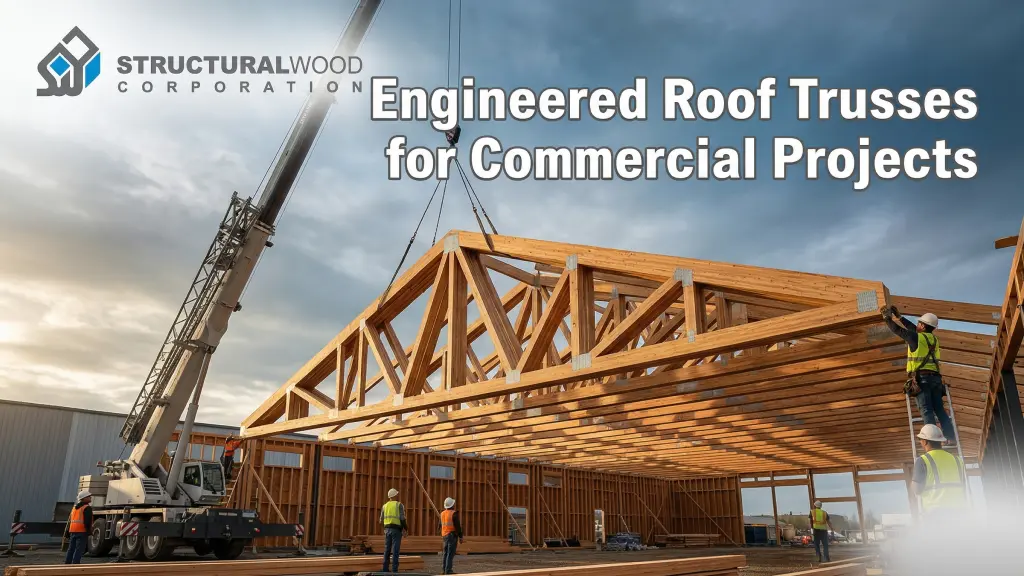
Commercial projects rise or fall on the strength of their roof.
Builders often ask the same question: How do I ensure the structure holds up without driving costs through the roof? That’s where engineered roof trusses for commercial projects come in.
Engineered roof trusses are designed for strength, speed, and code compliance. They solve the constant challenge of balancing safety with budget. Instead of piecing together framing on-site, trusses arrive ready to install, saving time and reducing waste.
A commercial build is only as reliable as its roof system. Choosing engineered roof trusses is the trusted way to keep timelines on track while meeting strict design requirements.
This guide will explain what sets engineered trusses apart, why they are well-suited for commercial projects, and the key questions to ask before ordering.
Let’s get into it.
What Makes Engineered Roof Trusses Different?
Engineered roof trusses are not just lumber nailed together. They are structural systems designed by engineers, built to carry heavy loads, and stamped to meet local codes. That’s why they are the backbone of so many commercial buildings across the USA.
Strength Built In
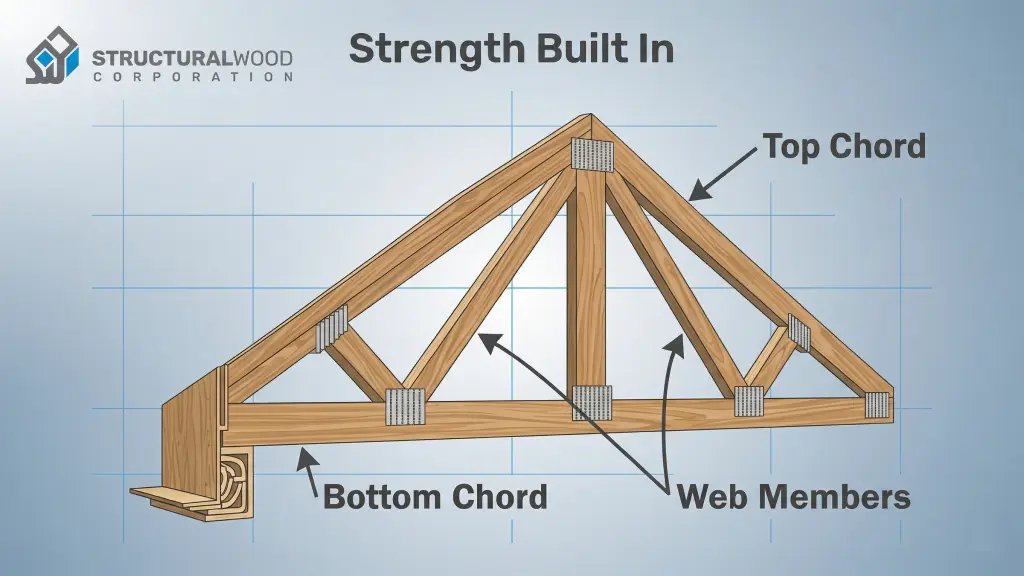
Each truss is manufactured with a precise arrangement of chords and web members, creating a triangle-based design that distributes weight evenly. The result is a roof that can handle wide spans without interior support beams. This strength for commercial spaces like warehouses, schools, and retail stores means more open floor plans and fewer structural limitations.
Designed for Codes
Commercial projects face strict inspections. Engineered roof trusses arrive with an engineer’s seal that proves they’ve been calculated for snow load, wind exposure, and other regional factors. This avoids delays during the permit process and gives building officials confidence in your design.
Tip: Always request stamped truss drawings that show load details. It’s one of the fastest ways to avoid plan review back-and-forth with inspectors.
Why Use Engineered Roof Trusses in Commercial Projects?
Commercial builds have tight budgets and strict timelines. Engineered roof trusses help solve both. They combine strength, speed, and flexibility in a way that traditional stick framing cannot match.
Faster Timelines, Lower Costs
Because trusses are prefabricated off-site, installation takes less time and needs fewer labor hours. Less cutting and measuring on the job means fewer mistakes and less waste, giving contractors predictable schedules and lower overhead.
Quick Tip: Ask your supplier about their on-time delivery rates. Reliable delivery is as important as the truss design itself.
Flexibility in Design
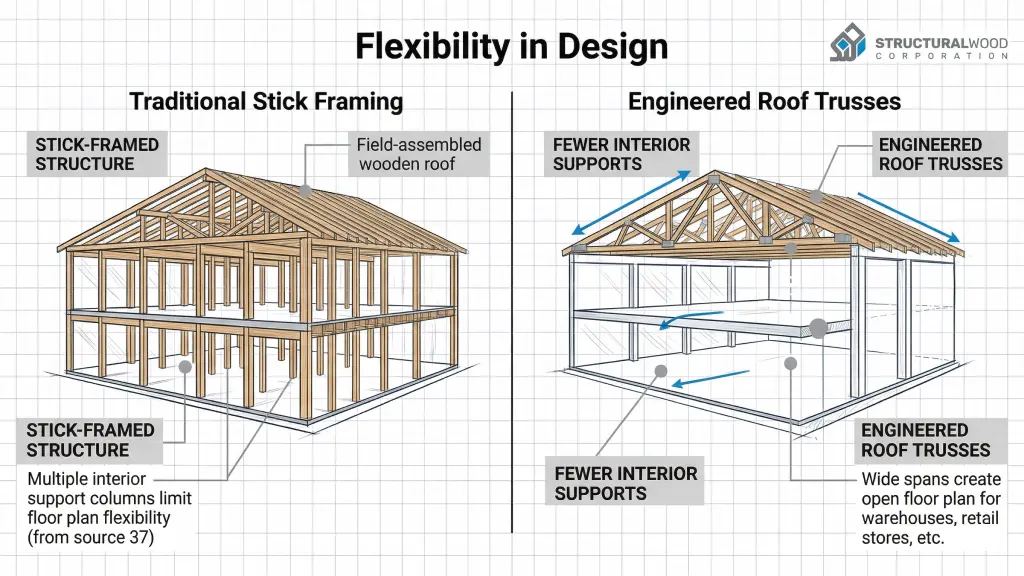
Engineered trusses can span wide distances without the need for interior support columns. That makes them perfect for open layouts in warehouses, gymnasiums, retail centers, and other commercial spaces where floor flexibility matters. Architects also get more freedom to design different roof shapes without compromising structural safety.
Safety and Reliability
Every engineered truss is tested to meet performance standards for snow, wind, and seismic loads. This reduces the risk of structural failure and provides peace of mind for owners and builders alike. The Federal Emergency Management Agency (FEMA) highlights engineered designs as a safer choice in areas prone to extreme weather events.
What to Ask Before Ordering Trusses
Even the best roof truss design falls short if the details are missed before ordering. Asking the right questions upfront saves time, money, and stress later in the project.
Key Questions to Bring to Your Supplier
- Do my trusses include an engineer’s stamp? This ensures compliance with building codes.
- What is the delivery lead time? Clear schedules help avoid costly site delays.
- Are snow load and wind exposure accounted for in the design? Each site has unique requirements.
- Do you provide staging plans for crane day? Proper staging reduces double-handling and keeps crews safe.
Pro Insight: A clear staging plan keeps crane day efficient and avoids costly downtime.
Learn the Basics Before You Order
If you want the full breakdown of roof truss types and design foundations, check out the Roof Truss Design Guide. It gives you the knowledge you need before choosing the right option for your commercial project.
Common Commercial Applications
Engineered roof trusses are not just for homes. Their strength and flexibility make them the go-to choice for a wide range of commercial projects across the USA.
Where Engineered Roof Trusses Fit Best
- Retail centers: Large open spaces with heavy foot traffic need wide spans and reliable support.
- Warehouses and factories: Clear floor space without interior columns is critical for equipment movement and storage.
- Educational and institutional buildings: Schools and universities benefit from cost savings and consistent structural performance.
- Religious and recreational facilities: Churches, gyms, and community centers often require high ceilings and wide, open layouts.
Sustainability and Energy Efficiency
Engineered roof trusses save time and money and support greener building practices. Because trusses are manufactured with precision, they use less lumber than traditional stick framing. This reduces material waste and lowers a project’s environmental footprint.
Trusses can also improve long-term energy efficiency when paired with proper insulation and roofing systems. A well-designed roof structure stabilizes heating and cooling costs, which matters for large commercial buildings with high utility demands.
Important: Ask your supplier how truss designs can support energy-efficient assemblies. Combining the right insulation and ventilation strategies with engineered trusses can reduce operating costs for decades.
For more insights, the U.S. Department of Energy provides resources on energy-saving roof systems and construction practices.
Final Thoughts
A strong roof system is the backbone of any commercial project. Engineered roof trusses give builders the mix of strength, cost savings, and design freedom needed to deliver on time and within budget. They cut down on labor, reduce material waste, and arrive ready to meet code requirements.
For contractors, developers, and architects, that means fewer headaches and more predictable results. The right truss choice doesn’t just support your roof; it supports the entire success of your project.
Structural Wood Corporation works with builders across the USA to supply engineered roof trusses designed for complex commercial needs. If you are planning your next build, our team can guide you through design, compliance, and delivery so your project stays on track.
FAQs
Are engineered roof trusses good for large commercial buildings?
Yes. Engineered roof trusses are designed to span wide distances, making them ideal for warehouses, schools, retail centers, and gymnasiums.
Do engineered roof trusses meet state and local codes?
Yes. Every engineered truss comes with an engineer’s stamp to show it meets snow load, wind exposure, and other code requirements.
How long does it take to get trusses delivered?
Delivery time depends on supplier schedules and the season. Most reliable suppliers give you a clear lead time before production begins.
Can engineered roof trusses be customized for unique designs?
Yes. Trusses can be built to match specific spans, roof pitches, and load conditions, even for unusual or complex layouts.
Do engineered trusses help lower construction costs?
Yes. Prefabricated trusses cut on-site labor, reduce waste, and speed up installation, which helps save money overall.