
Do permit reviews keep sending your truss drawings back with comments?
If that sounds familiar, you need roof truss design and engineering services at the start, not the end.
The issue is not the crane. It is gaps in span, pitch, spacing, or species that turn into delays and extra cost.
Here is the simple truth. The cheapest place to fix a roof is on paper. When inputs are clear and an engineer reviews early, approvals move faster, and your schedule stops slipping.
This guide shows the steps, the deliverables, and how to go from first sketch to stamped drawings and a clean price you can plan around.
Let’s get into it.
Why Professional Roof Truss Design Matters
The smartest place to fix a roof is on paper.
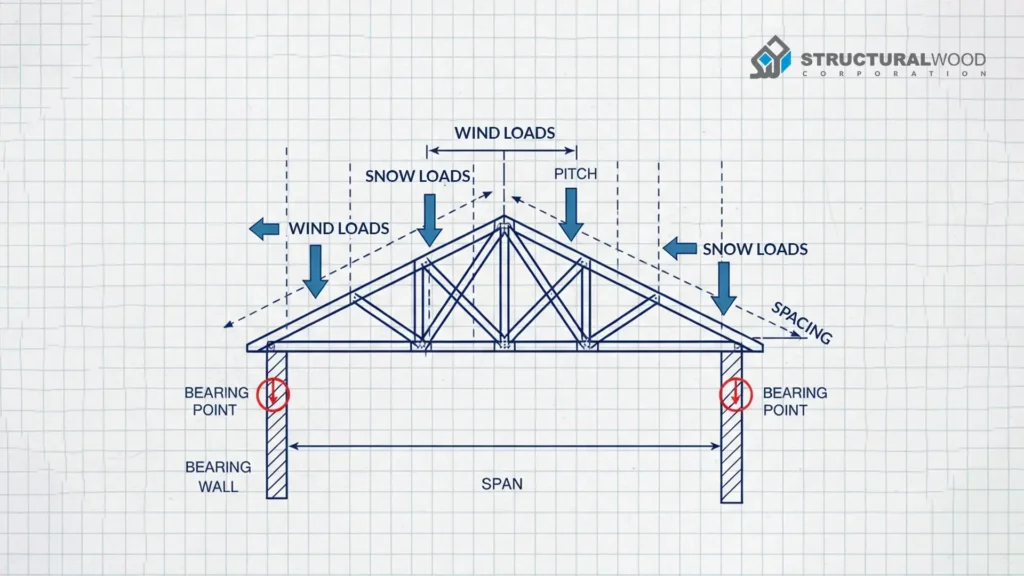
When you use roof truss design and engineering services, you do more than size lumber. You lock in the path that loads will follow through the roof and into the walls and supports. That means fewer surprises, faster approvals, and a crew that stays busy instead of waiting.
Here is what holds most projects back: incomplete specs. Span, pitch, truss spacing, species, and loads are unclear. The result is plan review back-and-forth, change orders, and a schedule that slips.
Here is what a solid design package gives you:
- Stamped truss drawings that match your site conditions.
- A placement plan that shows where each truss goes.
- Reactions at bearings so your supports are sized right.
- Permanent bracing notes so inspections move faster.
What does this mean for you? Less rework, fewer calls from the field, and a quote that holds.
Spotlight: Ask your provider to confirm wind exposure, ground snow load, and any special loads like solar or mechanical units. Clear inputs save time and money.
Step-by-Step Roof Truss Design Process
Want a permit review that passes the first time and a set schedule that runs smoothly? Start with clear inputs and a simple plan. Roof truss design and engineering services turn your address, loads, and roof shape into stamped drawings and a quote that holds. Here is how the process flows, step by step.
Step 1: Confirm Site and Loads
Start with location and code data. Your truss design must reflect wind, snow, live, and dead loads for your site. In the USA, engineers use ASCE 7 to set these loads, and local code officials review them during permit checks.
Why this matters: If loads are wrong, every size and connection after that drifts off target.
What to send? Project address, building use, risk category if known, roof pitch, and any special loads like solar or mechanical units.
Step 2: Choose the Right Truss Layout
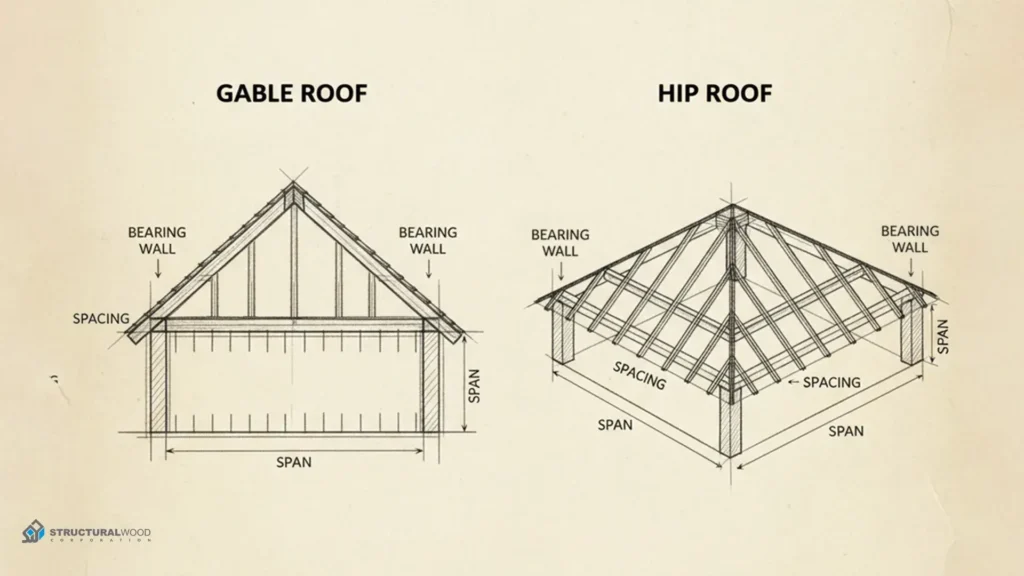
Once the loads are set, the engineer chooses a layout that fits your span and roof shape. It might be a straight gable run, a girder with valley sets for a hip roof, or a special frame for a long open space. The aim is a clear load path to the bearing walls or beams and as little work on site as possible.
Why is this important? The right layout cuts waste, limits field cuts, and speeds the set day.
Step 3: Analyze, Model, and Review
Engineers run the numbers and build a simple model of how forces move through the truss. The top and bottom members carry most of the load, and the inside webs share the rest. They choose sizes for the lumber, the connector plates, and the bearings.
Then they check how much the truss will bend and how it handles wind uplift. A second review looks for clashes with openings, chimneys, or ductwork.
Why this matters: This is where hidden problems surface while changes are still cheap.
Pro tip: Ask for a brief design summary that lists governing loads and the most stressed members. It helps everyone understand the choices.
Step 4: Produce Permit-Ready Drawings
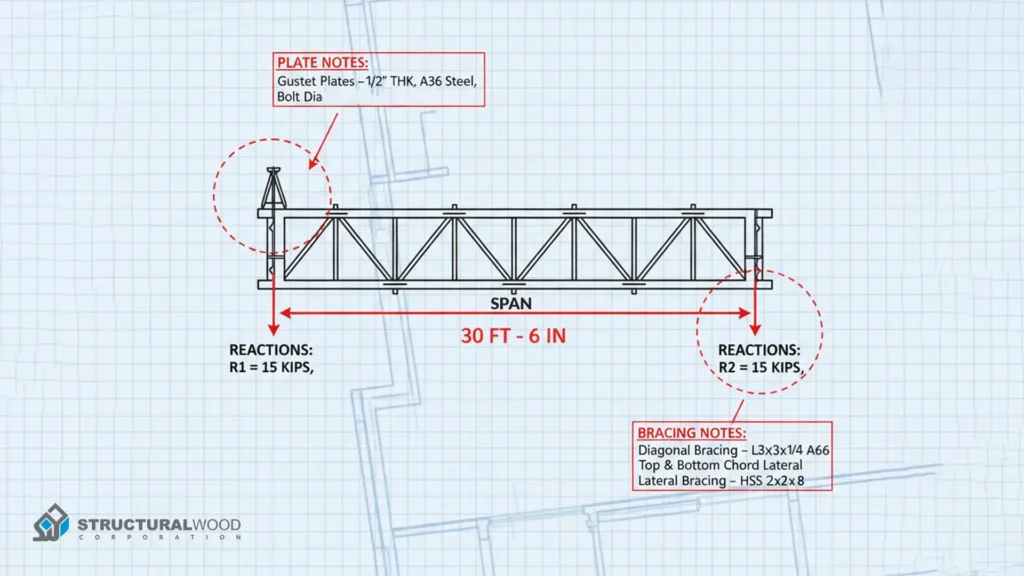
Your package includes truss design drawings that show roof slope, span, spacing, joint locations, reactions at the bearings, and the required bracing. Many city or county offices also want a truss placement plan in the permit set. In some areas, a licensed engineer must sign and seal each truss design drawing.
Why this matters: Clear, complete drawings shorten plan review and prevent bid confusion.
Heads up: Wind and snow loads in the IBC are referenced in ASCE 7. Ensure your drawings accurately reflect the correct wind speed map and snow load basis for your area.
What Makes a Good Truss Engineering Partner?
Not every supplier can call themselves a design partner.
Finding the right team for roof truss design and engineering services can make or break your project timeline. Some suppliers simply sell trusses. Others take ownership of the full design process, from stamped drawings to delivery coordination. You want the second kind.
A true engineering partner looks at your building as a whole system, not just a roofline. They ask the right questions early about load paths, bearing conditions, and site codes so your drawings pass plan review the first time. They design for safety, speed, and long-term reliability, not just the lowest material cost.
Here’s what sets them apart:
- They know regional codes and weather loads.
- Their designers and fabricators work together in real time.
- They give you a single point of contact through design and delivery.
- They provide clear, itemized quotes that separate design, fabrication, and shipping.
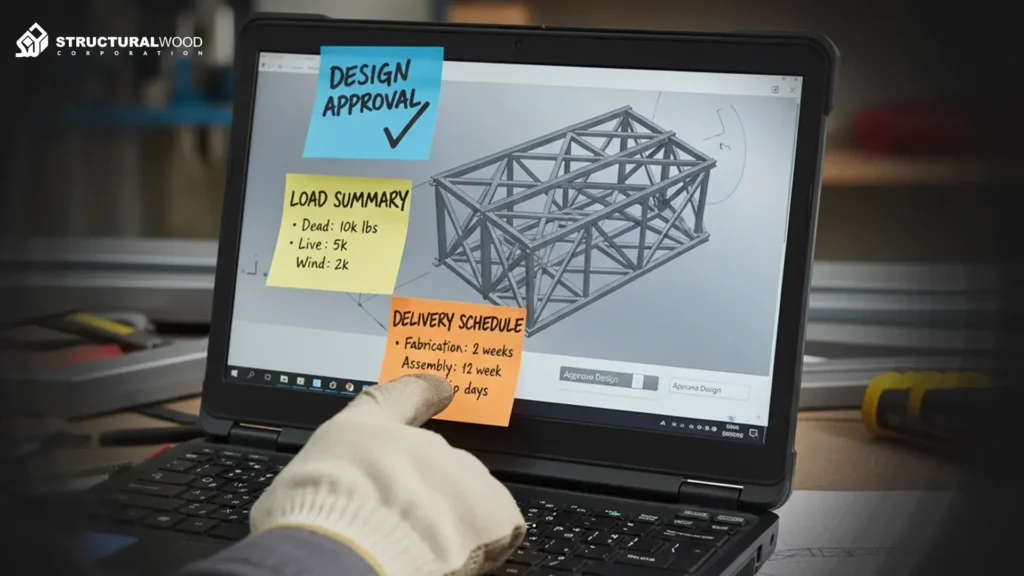
Quick Insight: The best partners will send digital truss layouts and load summaries for approval before fabrication. This keeps everyone aligned and prevents costly change orders.
For reference, see WoodWorks – Structural Engineering Resources for professional standards used across the USA.
Common Challenges in Roof Truss Design and How to Avoid Them
Most roof problems start on paper, not on-site.
Even strong crews struggle when design inputs are thin or unclear. The goal of roof truss design and engineering services is to remove risk before a single member is cut. These are the issues that slow jobs down and how to fix them early.
Wrong Site Loads and Exposure
If wind speed, ground snow load, or exposure is wrong, the entire design drifts off target. Plates, chords, and bearings can end up undersized. That leads to extra connections, new calculations, and plan review delays.
What to do? Send the exact site address and a short note on the surroundings. Open field, coastal, or urban block. Ask your engineer to confirm ASCE 7 wind and snow values for that point on the map. If you know your risk category, share it. If not, share the building use and let the engineer set it. A one-page load summary keeps everyone aligned.
Missing or Incomplete Specs
Loads can be perfect, and the design still stalls because simple inputs are missing. Common gaps are span, roof pitch, truss spacing, heel height, species and grade, and bearing type. Openings like skylights, chimneys, or roof units are often left out. Each missing item forces a redesign or a new quote.
What to do? Send a clean list in your first email: span, pitch, spacing, bearing type, species and grade, roof sheathing, dead load allowance, and any openings or mechanical units. Add a sketch if helpful. Clear inputs produce a clean design and a price that holds.
Late Engineering Approval
You can have a great layout, but if stamped drawings arrive late, permits and delivery slips. Crews wait. Cranes get rescheduled. You pay twice.
What to do? Agree on a simple timeline up front. Layout review first, then stamped drawings right after approval. Share your plan review window with the designer so the submittal lands on time. One contact owns the calendar and keeps everyone informed.
Unclear Communication Between Teams
Different versions of the plan drift through email threads. Field crews build from an old sheet. Someone changes a bearing wall and forgets to tell the designer. Mistakes follow.
What to do? Use one shared folder and one current layout. Put the revision date in the file name. Keep a short change log. Ask your provider for a single point of contact who confirms every change in writing before production starts.
Overlooking Bracing and Connections
Even a perfect truss can fail if permanent bracing or connectors are missed. Long webs may need specific bracing. Hangers, ties, and anchors must match reactions. Inspectors look for these details.
What to do? Read the bracing notes on the truss sheets and plan for materials before the set day. Walk through hangers and anchors with the installer. If anything is unclear, ask the engineer for a simple bracing sketch and a connector list matched to reactions.
Quick checklist
- Do we have wind, snow, and exposure confirmed for this address?
- Did we send span, pitch, spacing, heel height, species and grade, and bearing type?
- Are openings and roof units marked on the drawings?
- Is there one approved layout in a shared folder with a clear revision date?
- Do we understand permanent bracing and connectors before the set day?
Get your specs right with the Roof Truss Design Guide. It explains span, pitch, spacing, wind, and snow loads, and the steps designers follow. Use it to prepare a clear request for roof truss design and engineering services and speed up plan review.
Final Thoughts
When the design is right, everything else gets easier. Permits move faster. Crews stay busy. Quotes match the final build. That is the value of roof truss design and engineering services done well.
If you are ready to move, Structural Wood Corporation can review your drawings and site loads, prepare stamped truss design drawings and a clear placement plan, and coordinate delivery on your schedule.
For a quick start, share your plans, the site address, roof span and pitch, truss spacing, bearing type, and any roof openings. We will confirm the loads and respond with the next steps or a firm quote.
FAQs
What do roof truss design and engineering services include?
Load evaluation, truss layout, structural analysis, stamped truss design drawings, a placement plan, and coordination for fabrication and delivery.
Do I need stamped drawings for my project?
Often, yes. The IRC requires truss design drawings to be submitted and approved, and many building departments ask for sealed truss design drawings. Local statutes decide when a registered design professional must stamp them. 
How long does roof truss design and engineering take?
With clear inputs, simple roofs can be designed and stamped in a few days. Complex roofs often take about one to two weeks.
What should I send to get an accurate quote for roof truss design and engineering services?
Project address, span, pitch, truss spacing, species and grade, bearing type, roof openings, and any special loads like solar or mechanical units.