
Weather and Climate Affect Roof Trusses: Stop letting the weather decide how long your roof lasts.
Roof trusses are the backbone of your home, and every storm, heat wave, or damp season puts them to the test. If you ignore the impact of climate, you are risking costly repairs and even the safety of your house.
The reality is clear. Weather and climate place significant stress on roof trusses and can shorten roof life if ignored. Moisture causes swelling and rot. Temperature swings create cracks that spread silently. Heavy snow and strong winds push trusses to their breaking point.
The advantage is on your side if you act early. With the right design, smart protection, and simple maintenance, you can build roof trusses that last for decades, no matter what the forecast says.
Let’s get into it.
Why Climate Plays a Big Role in Roof Truss Durability
Climate is not just background weather. It is a major factor that determines how long your roof trusses last. A truss that performs well in a dry, sunny state can fail quickly in a region with heavy snow or constant humidity. That is why professional builders always design with local weather in mind.
From building codes in hurricane zones to snow load requirements in northern states, the rules are written to match the climate. Ignore them, and you risk trusses that weaken long before their time.
Note: A roof truss designed for a desert climate will not stand strong in a snowy region. Choosing the right design for your weather zone is the first step toward durability.
The Biggest Weather Factors That Affect Roof Trusses
The weather does not damage a roof all at once. It chips away slowly, season after season, until the weak points finally show.
Trusses feel this stress more than anything else, and the signs often remain hidden until repairs are expensive. Here are the main ways climate tests your roof structure.
Moisture and Humidity Damage
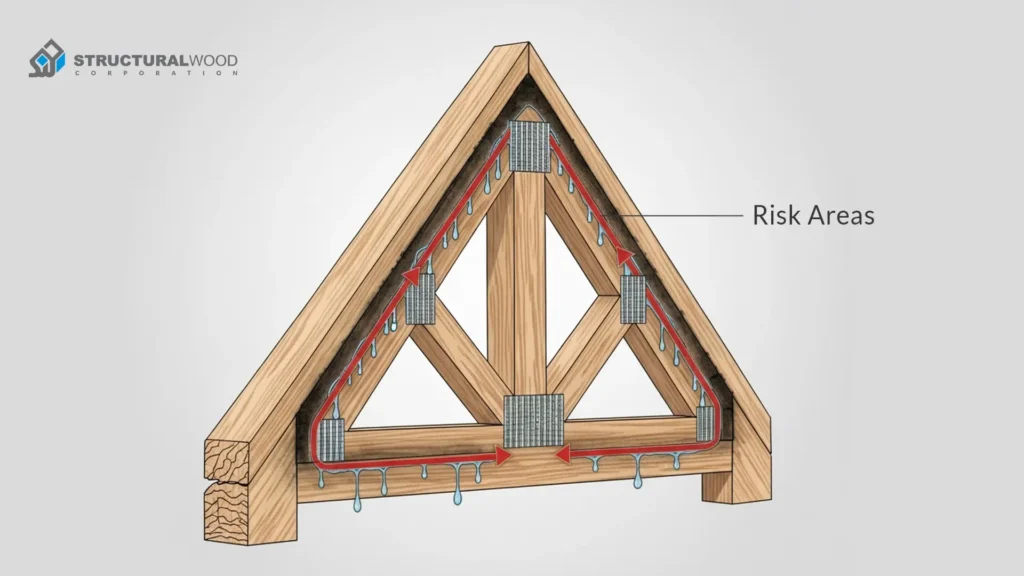
Moisture is the silent killer of wood trusses. In damp regions, wood fibers swell and warp, making joints pull apart. Over time, this creates openings for rot, mold, and mildew to spread across the attic.
Once mold sets in, it not only harms your roof trusses but also affects indoor air quality. According to Energy.gov, sealing leaks and controlling moisture are essential in improving durability and preventing decay.
Warning: Ignoring attic moisture can severely shorten roof truss life.
Temperature Fluctuations and Seasonal Stress
Roof trusses expand in the heat and contract in the cold. Wood and metal both move, but in different ways, creating hidden stress at joints and fasteners. In regions with freezing nights and warm days, this cycle repeats hundreds of times every year, weakening trusses slowly.
Reminder: Even small seasonal shifts can create cracks you do not notice until it is too late.
Heavy Snow Load on Roof Truss Strength
Snow can look harmless, but once it piles up, it adds serious weight. A practical rule of thumb is that one foot of wet snow adds about 20 pounds per square foot on a roof. If the accumulation exceeds the design roof snow load, trusses can sag or fail.
U.S. building codes require roof snow loads to be determined using ASCE 7 procedures and ground snow load maps, which are adopted in the International Building Code.
Important: A few inches of heavy, wet snow can add thousands of pounds of pressure across your roof.
See FEMA’s Snow Load Safety Guide P-957, which has detailed guidance on how to calculate snow load, what risk conditions look like, and what safety steps to take.
Wind and Storm Resistance
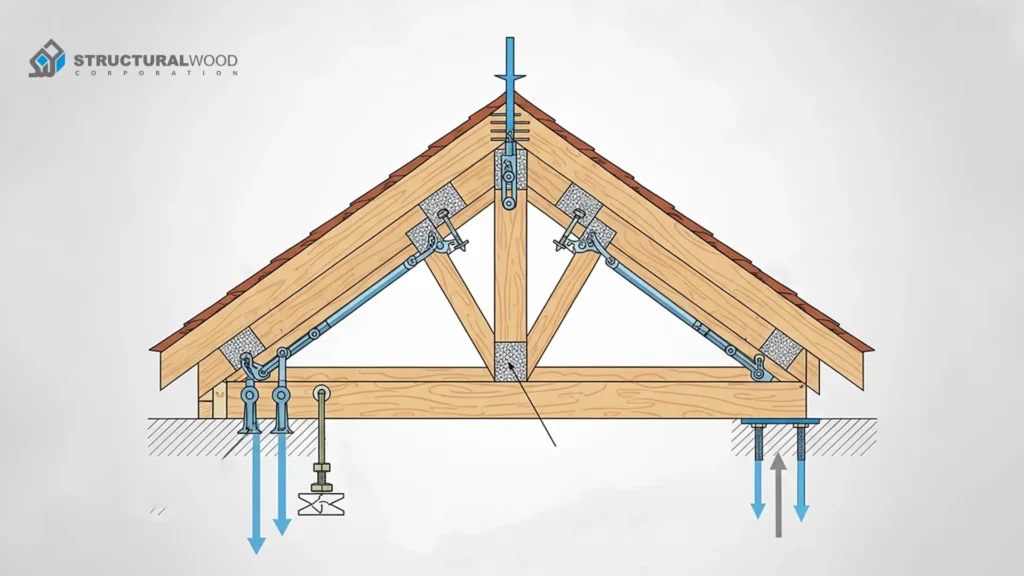
High winds do more than lift shingles. They create uplift that can pull the roof framing off the walls unless there is a continuous load path with connectors and fasteners like hurricane straps and ties. In hurricane and tornado regions, roof-to-wall anchoring, proper sheathing attachment, and bracing at gable ends are critical to prevent structural failure.
Building codes require wind design using ASCE 7 wind provisions as adopted by the International Building Code and International Residential Code.
Note: Wind-resistant design starts with a continuous load path from the roof sheathing through the trusses and walls to the foundation, not just the roofing material on top.
Protecting Roof Trusses from Weather and Climate Stress
Weather does not wait, and neither should you. Roof trusses can last decades, but only if they are protected against the very forces that wear them down. Preventing rot, blocking moisture, and weatherproofing for harsh conditions are steps every homeowner should take before the damage begins.
Pro Insight: Check out our Roof Truss Design Guide for truss types, design tips, and common issues.
Preventing Rot, Decay, and Moisture Damage
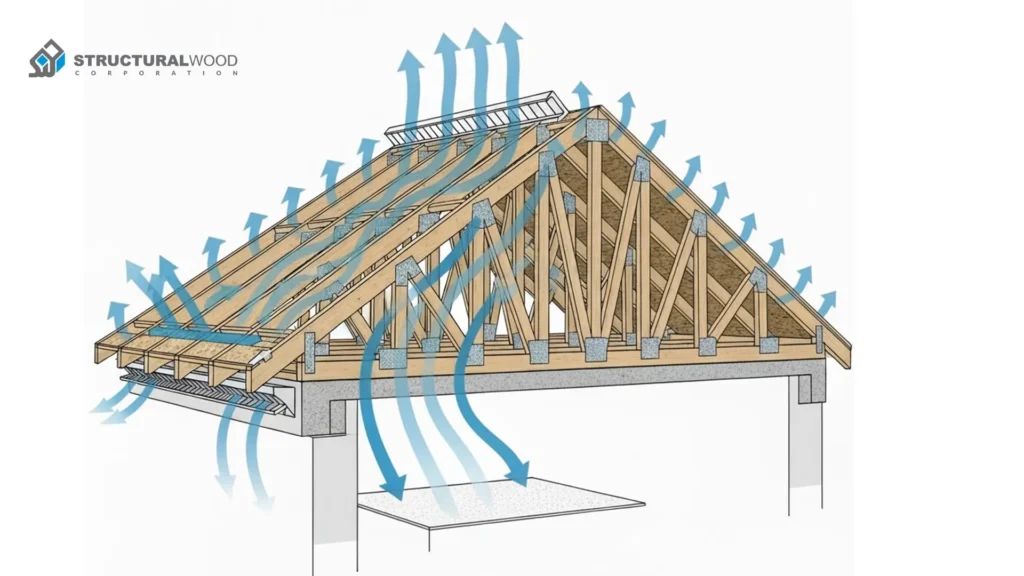
Rot is one of the fastest ways to weaken roof trusses, especially in areas with high rainfall or poor attic ventilation. The solution is layered: sealants protect the surface, ventilation moves out trapped air, and insulation prevents condensation from building up inside the attic.
Pro Tip: Check attic ventilation and insulation together. If one is failing, the other cannot do its job.
Weatherproofing for Longevity
Protective coatings, metal plates, and treated lumber can make roof trusses far more resistant to moisture and temperature swings. In coastal regions, corrosion-resistant fasteners are essential, while in snowy zones, water-repellent finishes stop meltwater from seeping into joints.
Reminder: Small upgrades during installation cost far less than structural repairs years later.
Maintenance Tips for Harsh Climates
Even the strongest trusses need attention. Weather wears them down slowly, so the best way to stay ahead is with simple seasonal checks.
A few minutes each season can prevent costly damage and keep your trusses strong for decades.
Checklist Table: Seasonal Roof Truss Care
| Season | What to Check | What It Prevents |
| Spring | Look for leaks or stains after snowmelt and heavy rains. | Stops water damage before rot and mold spread. |
| Summer | Inspect for cracks from expansion and confirm attic ventilation. | Prevents stress damage and keeps airflow steady. |
| Fall | Clear gutters, soffit vents, and insulation around eaves. | Prepares trusses for snow and reduces moisture buildup. |
| Winter | Watch for sagging or creaking after heavy snow loads. | Prevents overload failures and keeps the roof safe. |
Reminder: A quick seasonal check now saves thousands in repairs later.
For practical attic care tips, see Energy.gov’s Air Sealing Guide.
Final Thoughts
The weather will always test your roof, but it does not have to decide how long it lasts. With the right truss design, protective treatments, and a simple seasonal maintenance plan, your roof structure can stay strong for decades.
The key is not waiting for damage to appear. Small cracks, trapped moisture, or heavy snow pressure become costly when ignored, but they are easy to manage when caught early.
At Structural Wood Corporation, we build roof trusses designed to handle the challenges of your climate. Our focus is durability, safety, and long-term performance, so you can feel confident that your home is protected.
Ready to make your roof stronger than the weather? Let us guide your next project.
FAQs
How does humidity affect roof trusses?
Humidity makes wood trusses swell and warp, which weakens joints over time. If left unchecked, moisture also creates the perfect environment for mold and mildew.
Can temperature changes really damage roof trusses?
Yes. Temperature swings cause wood and metal to expand and contract. This constant stress creates small cracks that grow bigger season after season.
What is the snow load capacity for roof trusses?
Snow load capacity is the maximum weight your roof trusses can safely hold. It depends on your local building code, climate zone, and the type of truss design used.
How can I make roof trusses more weatherproof?
Weatherproofing starts with treatments and sealants, but good attic ventilation and insulation are just as important. These steps prevent rot, decay, and moisture damage.
Do metal trusses handle weather better than wood?
Metal trusses resist moisture and pests better than wood, but they still expand and contract in temperature swings. The right choice depends on your climate and budget.