
Looking for custom roof truss builders near Waddington, NY, but not sure who to trust?
Many homeowners and contractors face the same problem. The wrong choice can result in long delays, additional costs, and trusses that fail to meet local building requirements.
The best part: The right local builder makes the process simple. They design to your exact span and pitch, handle snow load requirements, and deliver on time.
This guide will walk you through why roof trusses matter, how local builders give you an edge, and what to check before you place an order.
Let’s get into it.
Before we go further, check out the Roof Truss Design Guide. It is the quickest way to understand the basics.
Why Roof Trusses Are the Backbone of a Solid Roof
Most projects stumble not on finishes, but on framing. Get the frame right, and everything above it just works.
What Roof Trusses Actually Do
Trusses carry the weight of the roof, snow, wind, and the stuff you add later, like solar arrays or attic storage. They spread loads safely to the walls so your roof stays straight, dry, and quiet. New York projects also have to respect mapped ground snow loads set by the state’s residential code, which builders convert into roof snow loads during design.
Energy Comfort Bonus
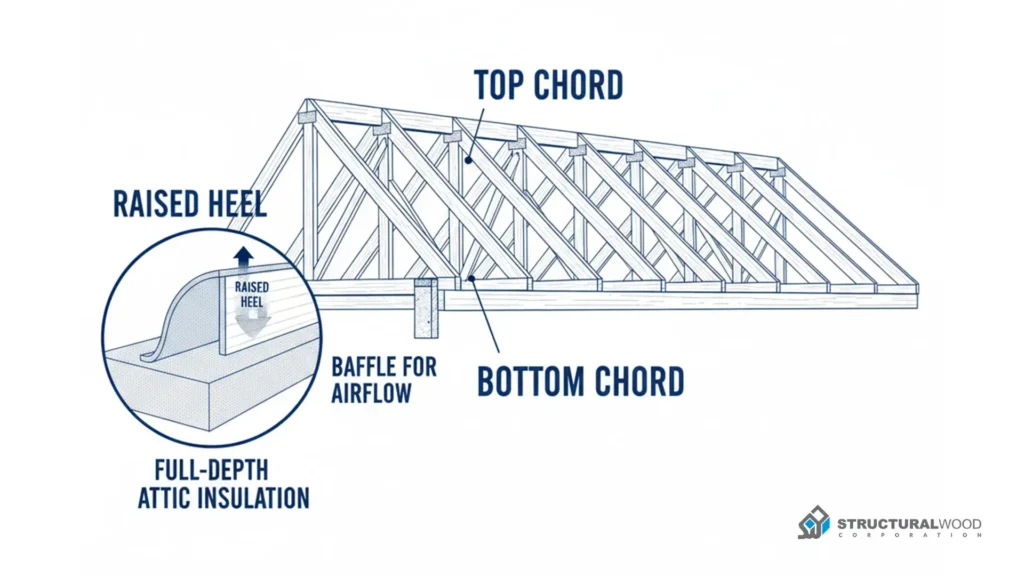
Good truss design supports smart insulation at the attic edges, where heat loss is worst. Raised heel trusses allow full-depth insulation at the eaves, which reduces cold spots and improves comfort.
The U.S. Department of Energy and the Building America Solution Center both explain how proper attic insulation and air sealing cut energy waste.
Why is it important? When the framing matches local snow loads and supports full-depth insulation, you avoid sagging, ice dams, drywall cracks, and high energy bills.
Builder’s check: Ask your truss supplier to confirm the roof snow load they used and how they handled drift along ridges, step-downs, or parapets. This is standard practice and protects you during heavy winters.
Why Choose Custom Roof Truss Builders Near Waddington, NY?
Local makes the hard parts easier. Codes, snow, and delivery are all handled close to home.
Local Code Fit
Northern New York projects must meet the Residential Code of New York State. That means the roof design has to use the right ground snow load and roof live load values. A local truss shop works with those numbers every day and designs for the correct loads from the start.
Weather and Site Reality
Snow drifts, step-downs, and ridges can create uneven loading. Local builders know how these winter patterns show up on real homes and account for them in the package you receive.
Faster, Cleaner Delivery
Shorter routes reduce the risk of damage and make crane day simpler. Many local teams can stage the drop so plates stay protected and crews waste less time waiting for the next lift. (You still need to confirm the exact services when quoting.)
What does this mean for you? Stronger compliance, fewer red lines during plan review, and less chance of mid-build surprises. Town plan review sheets in New York call out snow loads and roof loads as required design criteria, so getting them right up front saves rework.
Field note: Ask your builder to list the roof snow load design and any drift cases they used. It shows the package was checked for local winter effects.
Custom Truss Options for Different Projects
One size fits no one. Pick the truss that matches your span, pitch, and use.
Residential Roof Trusses
Most homes use layouts like Fink, gable, and attic rooms. They give strong support with efficient lumber use and predictable lead times. Attic room trusses add storage or a bonus room without changing the footprint. Ask for clear heel height, bearing points, and mechanical paths so trades can work without surprises.
Commercial Roof Trusses
Shops, barns, and warehouses need wider spans and higher loads. Parallel chord and girder trusses open the floor below for racks and equipment. Fire ratings, hanger schedules, and connection details matter more here. Make sure the package includes hardware specs and shop drawings that match your engineer of record.
Specialty and Custom Designs
Cathedral ceilings, vaulted spaces, and raised heel trusses improve comfort and headroom. A raised heel keeps full-depth insulation at the eaves, which reduces cold spots and ice risk. For solar arrays or heavy roof finishes, ask the builder to include that extra load in the design.
Pro tip: Bring your latest plan set and site address when you request a quote. Accurate spans, pitches, and snow load locations speed up design and avoid change orders.
Services a Reliable Truss Builder Should Offer
You are not just buying wood. You are buying design, timing, and less hassle on-site.
- Engineered drawings and stamps: You should get sealed truss drawings and a layout that matches your plans. This proves that the design meets the code and gives your building official what it needs.
- Permit support and code notes: A good shop helps you answer a lot of questions during plan review. They list design roof snow load, wind exposure, and bearing conditions right on the sheets.
- Clear lead times and delivery window: Ask for a written production schedule and a real delivery window. Good partners update you if anything slips and help you plan crane time without guesswork.
- Staging and set guidance: Look for basic set guidance with the package. That includes how to store trusses flat, how to lift without bending plates, and where bracing starts during the first lifts.
- Hardware and hanger schedule: You should know which hangers, straps, and bracing are required. The schedule avoids last-minute runs to the store and keeps the inspection smooth.
- Quality checks and communication: Expect a named contact who answers the phone, confirms measurements, and signs off on any change. One point of contact prevents crossed wires between the field and the plant.
Builder checklist: Ask for these in writing:
- stamped drawings
- layout, load notes
- delivery window
- hanger schedule, and set guidance.
A two-page checklist now prevents two weeks of delay later.
Steps to Find the Best Truss Builder Near Waddington, NY
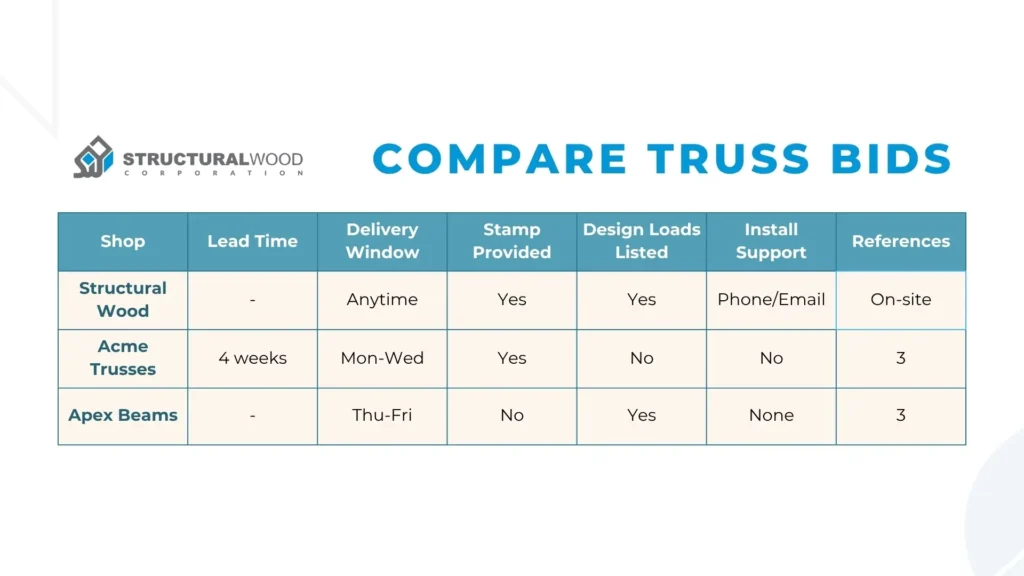
Slow down for ten minutes now, save ten days later.
Check Credentials and Experience
Ask for recent projects in St. Lawrence County and a sample truss layout. Confirm they provide sealed drawings. A shop that does this weekly will show you clean paperwork without stalling.
Compare Lead Times and Delivery Windows
Get a written production date and a delivery window. Ask what happens if the weather shuts down a day. Reliable teams explain their backup plan and who will call you with updates.
Verify Design Loads and Stamps
Request the design of the roof snow load, wind exposure, and lumber grades on the drawings. Confirm that an engineer’s stamp is included where the building official expects it. This prevents back-and-forth during plan review.
Ask About Installation Support
Do they coordinate crane time or only deliver curbside? Will they stage bundles in order of set? Clear answers here prevent crew downtime and double handling.
Review Local References
Call two recent customers within 50 miles. Ask if the package arrived complete, whether the plates were protected, and if the layout matched the field. Local word of mouth is hard to fake.
Smart buyer tip: Email your plan set and site address with the quote request. Ask the shop to reply with loads used, stamp info, lead time, and a delivery window in the same email. You will have everything in one thread for the permit and scheduling.
What Impacts the Cost of Roof Trusses?
Price is not just lumber. It is span, pitch, timing, and planning.
Main Cost Drivers
- Span and pitch: Longer spans and steeper roofs use more lumber and stronger plates.
- Loads and design: Higher snow or wind loads raise member sizes and connection needs.
- Quantity and layout: Complex roofs with many hips and valleys add design time and pieces.
- Hardware and bracing: Hangers, straps, and temporary bracing add to the total.
- Schedule and delivery: Rush orders and long routes raise costs. Local staging can cut waste.
Value Moves That Lower Total Cost
- Lock specs early: Final spans, pitches, and loads prevent redraws and rework.
- Order a raised heel where it pays back: Full-depth eave insulation can cut energy loss and reduce ice risk. See DOE guidance on attic insulation and air sealing.
Match design to local code: Use the right New York snow load values to avoid changing orders during the plan review.
Cost saver: Ask for two prices on the same layout: standard heel and raised heel. Compare the upfront cost to the expected energy savings over five winters.
Final Thought
A smooth build starts with a strong frame and clear plans. Choose a local truss team that stamps the drawings, sets honest lead times, and understands New York snow loads.
Confirm spans, pitches, and delivery details early, then plan crane day so the set runs clean. Do this, and the rest of the job moves faster with fewer surprises.
Structural Wood Corporation can review your plans, answer code questions, and price your truss package. If you want a quick check or a fair quote, reach out, and we will help you get it right.
FAQs
Where can I find local truss builders near Waddington?
Check nearby truss plants and building supply yards. Ask for recent jobs within 50 miles and a written quote.
Do I need stamped drawings for roof trusses in New York?
Yes. Most towns require sealed truss drawings and a layout for permit and inspection.
How long does delivery take after I order?
Usually two to four weeks, longer in peak season. Get a written production date and delivery window.
Can builders help with installation or crane day?
Some do. Confirm if they only deliver curbside or also stage bundles and coordinate crane time.
What info do I need for a fast, accurate quote?
Your plan set, site address, spans and pitches, heel height, and any extra loads like solar.