
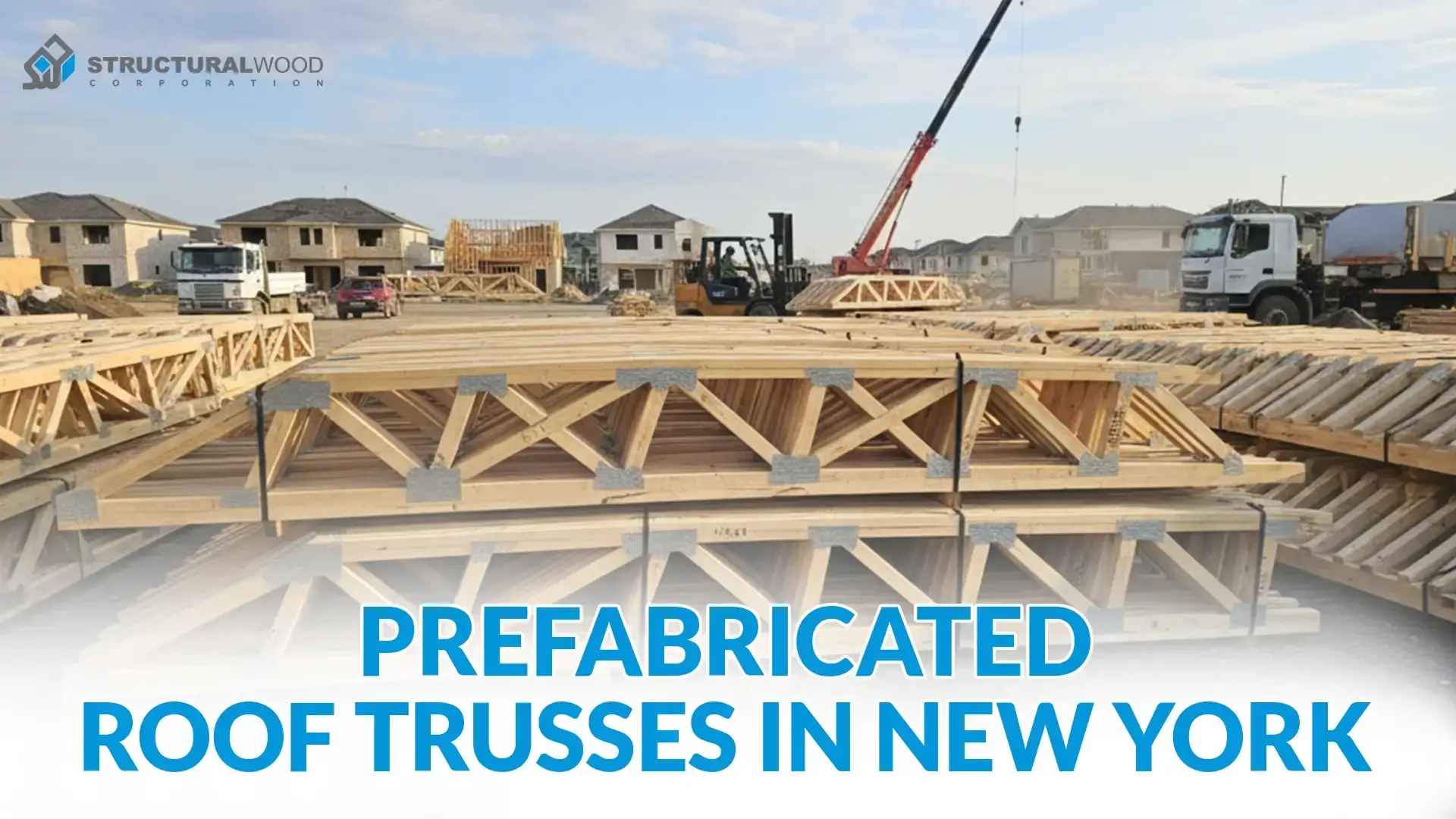
In the United States, 63.8% of new single-family roofs use prefabricated trusses, and that rises to 71.8% when hybrid roofs are included.
When you buy prefabricated roof trusses in New York, those numbers matter. They point to faster builds, steadier quality, and fewer surprises.
If you cut and frame every roof on-site, delays add up. Labor costs go up. Mistakes happen. Many New York builders and homeowners face this problem.
Here is the truth: Buying prefabricated roof trusses in New York solves those headaches. They arrive engineered, consistent, and ready to install. That saves time and keeps projects on budget.
This guide will walk you through why prefab trusses matter, where to buy them, how much they cost, and what to check before ordering.
Let’s get into it.
Why Prefabricated Roof Trusses Are a Smarter Choice
New York builders pick them because they save time and reduce risk. Trusses come ready to set, so crews can close the roof faster and avoid weather delays.
Faster From Drop-off to Dry-In
Prefab trusses arrive cut and engineered. Crews lift, place, and brace. Less cutting at height. Fewer steps. Jobs move quicker, and the house gets covered sooner, which protects the build from rain.
Heads up: Falls are the top cause of death in home building. Clear plans and fall protection are required when you set trusses.
Strong, Consistent, and Code Ready
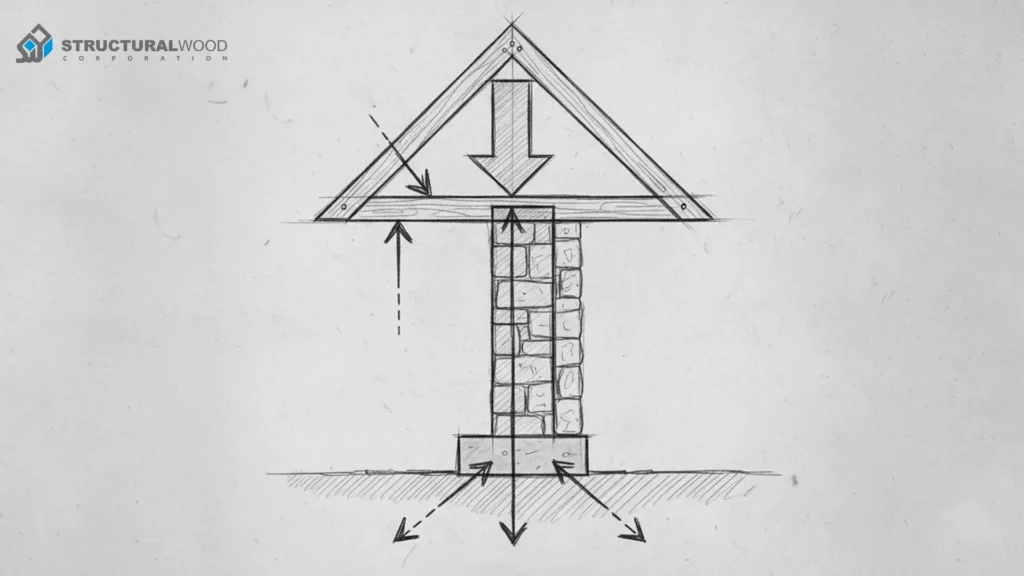
Trusses are engineered to carry roof loads. That includes snow and wind that New York homes must handle. Design must follow the state code and ASCE 7 for loads. Ask for stamped drawings.
Pro tip: A continuous load path from roof to foundation helps a home stay intact in high wind. Truss-to-wall-to-foundation connections matter.
Lean Labor and Fewer Mistakes
With prefab trusses there is less layout math on the ladder. That reduces cutting errors and speeds up framing. Crews can focus on safe lifting, bracing, and sheathing.
Safety note: When work is six feet or more above a lower level, fall protection is required. Plan anchors before the first truss goes up.
Why does this matter? Time saved at framing protects budget and schedule. Better consistency reduces callbacks later. Meeting code on loads gives peace of mind when winter and storms hit New York.
Where to Buy Prefabricated Roof Trusses in New York
You have three good paths. Local truss plants, building supply yards, and trusted online sellers that cover New York. Pick based on lead time, design help, and delivery reach.
Local Truss Manufacturers
You get stamped drawings, fast back-and-forth with the design tech, and delivery that fits your site. Ask for prior jobs in your county, snow and wind load experience, and sample layout sheets.
Buyer tip: Ask for stamped drawings for your town or city. Some New York towns and NYC have strict review rules for truss systems.
Building Supply Stores
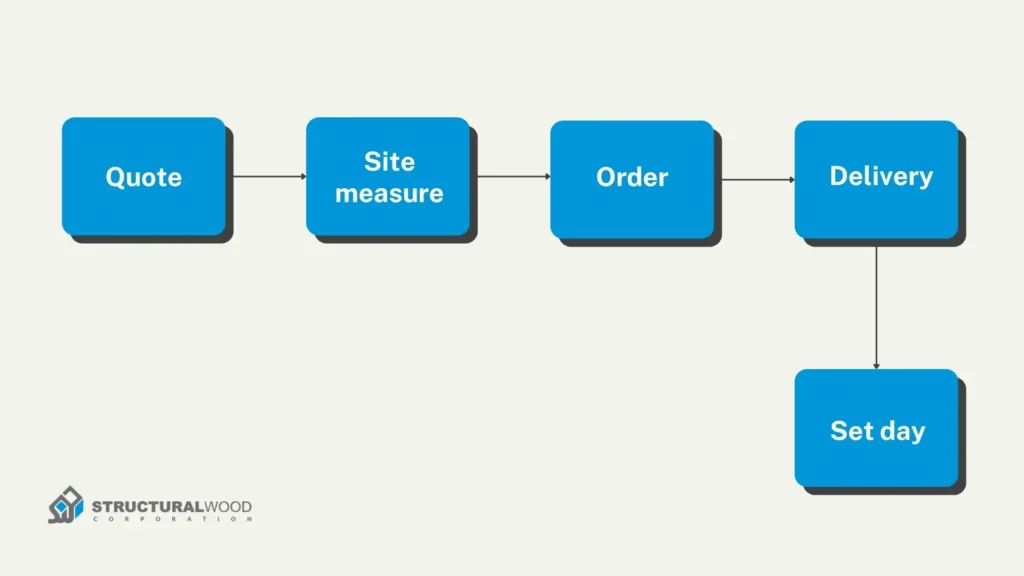
Large yards can place your truss order through partner plants. This is handy if you already buy framing lumber there. You may pay a small premium for the one-stop process, but returns and service are simple.
Quick check: Confirm the yard will coordinate crane day with the truss plant and give a window for the truck arrival.
Online Suppliers That Serve New York
Some online sellers cover the state with regional plants. You can upload plans and get a fast quote. Check who seals the drawings, where the plant is, and what the delivery rules are on narrow streets.
Heads up: Wide or long loads may need a New York State special hauling permit. Ask the seller if the carrier handles this.
Key Considerations Before You Buy
Get these basics right before you place an order. It will save time and money later.
Building Code and Approvals
Ask for truss design drawings that match your town or city rules. In New York, truss design drawings must be given to the building official and approved before installation.
Heads up: Some New York towns and the city add checks for special cases. For example, New York City has added rules for bracing and inspection on long-span cold-formed steel trusses.
Snow and Wind Design Numbers
Make sure the truss quote uses the right ground snow load and wind speed for your site. New York follows the Residential Code and ASCE 7 for loads. You can look up snow and wind values with the ASCE Hazard Tool or state guidance.
Stamped Engineering and Layout
Ask who will seal the truss drawings and what state license they hold. Many projects need stamped drawings for each truss type. Also ask for a clear layout sheet and bracing plan.
Checklist:
- Stamped drawings for trusses.
- Layout sheet with tags that match the bundle labels.
- Permanent bracing notes.
- Any city or town forms that must be filed.
Delivery and Access Plan
Trusses are wide loads. Confirm truck route, street width, and set location. In New York State and in New York City, wide or long loads can need a special permit and a planned route. Your supplier or carrier should guide this.
Quick safety note: Plan a clear drop zone and crane swing. Keep people out of the lift path. This will make the set day smoother.
Truss Tags, Storage, and Handling
Ask how each bundle is tagged to match the layout. Plan dry, level storage off the ground. Keep webs and plates clear of standing water. Follow the approved bracing plan during installation.
Buyer tip: Do not cut or drill truss members in the field without written approval from the engineer of record.
Marking for Truss Buildings
New York State has rules for marking some buildings that use truss-type construction. Ask your local authority if a mark is required for the project type and location.
Remember: Your local code office is the final word. A quick call now can prevent rework later.
Cost of Prefabricated Roof Trusses in New York
Prices change by roof size, span, pitch, material, and delivery. A simple way to plan is to look at the full project range and the per-square-foot range.
Quick Ranges to Budget
- Full project range: According to HomeAdvisor, most homes spend $7,500 to $35,000, with an average near $16,500 for roof trusses.
- Per square foot installed: HomeGuide data show about $5 to $14 per square foot for trusses, depending on type and span.
- Per truss (materials only): HomeGuide estimates about $60 to $500 for wood trusses and $150 to $700 for steel.
What Moves the Price Up or Down
- Size and span: Longer trusses and steeper pitch cost more.
- Type: Attic, scissor, or hip sets add cost over simple Fink sets.
- Loads: Higher snow or wind design increases member sizes and plate sizes.
- Delivery and set: Narrow streets or long routes can add fees. Crane day is a separate cost in many cases.
Money saver: Ask for a quote with the same layout, pitch, and loads from at least two sellers. Matching inputs makes the prices easy to compare.
Example Budgets by Roof Size
Fixr’s guide shows truss framing ranges that scale with roof area. For a 1,500 sq ft roof, the truss frame can cost around $6,270 to $11,550 as a ballpark. Use this as a start and adjust for your design and local labor.
Heads up: Quotes often exclude sheathing, underlayment, and shingles. Ask what is in or out so you do not miss a line item.
Prefabricated Roof Trusses vs. Traditional Methods
Here is the quick comparison. Prefab trusses go up fast and cut labor. Stick framing takes more steps and more time.
| Aspect | Prefabricated Roof Trusses | Stick Framing |
| Speed to dry in | Fast set. Roof covers sooner. | Many steps. Slower to cover. |
| Labor demand | Fewer hours on ladders. | More skilled hours on-site. |
| Code and engineering | Stamped drawings help with approval. | More field proof during inspection. |
| Total cost risk | Lean labor and fewer do-overs. | Delays and rework push costs up. |
| Delivery and site fit | One planned drop. Works in tight streets. | Many lumber drops and more handling on-site. |
| Weather risk | Faster cover means less rain damage. | It takes longer to cover, so rain can slow work and leave materials wet. |
| Waste and cleanup | Less scrap and fewer fixes. | More offcuts and cleanup time. |
For design basics, spans, and common truss types, read our Roof Truss Design guide for construction professionals.
Final Thought
Buying prefabricated roof trusses in New York keeps your build on time and on budget. You get an engineered system that sets fast, handles snow and wind the right way, and cuts down on mistakes. Crews spend less time on ladders. The roof covers sooner. Your project moves forward with fewer surprises.
At Structural Wood, we design and supply prefabricated roof trusses that meet New York code and job needs. If you want help, ask for a free quote or a short call. We will review your plans and give clear options.
FAQs
Where can I buy prefabricated roof trusses in New York?
Local truss plants, large building supply yards, and reputable regional suppliers. Ask for stamped drawings and a clear delivery plan.
Do I need a permit or stamped drawings?
Yes. Most towns require a building permit and engineered truss drawings. Confirm the stamp is accepted by your local building office.
How long does delivery take?
It varies by season and plant schedule. Ask the seller to write the delivery week on your quote.
Can trusses be customized for my roof shape?
Yes. Designers can match your span, pitch, and local snow and wind loads.
Who handles crane day and setup?
It depends on the seller. Confirm whether the quote includes crane service and on-site set support.